Thursday, October 17, 2019
Friday, August 24, 2018
HAT AS OBJECT AND EXPERIENCE
WHAT DO YOU SEE WHEN YOU CLOSE YOUR EYES AND HEAR THE WORD "HAT"?
The argument for object as art has been made through the
ages: Decartes, Hussserl, Hegel, Heidegger ruminated and philosophized about
the nature of art and it's "thingly" character. What makes an art
object? Art theory will always touch upon form, context and the nature of an
object, but it is left to the beholder and the artist to define what art is. A
hat is an object, either made as a protective or a decorative thing. Wearable,
and by definition, an object. But elevate its character to a more creative
level and it can be art.
Hats lend an element to the wearer and depend upon
personality, personal style, the fashion of the hat, the world view of the
wearer. In the past, hats denoted not just style but status. They were and
still are a uniform depending upon definition. Geography mandates the shape,
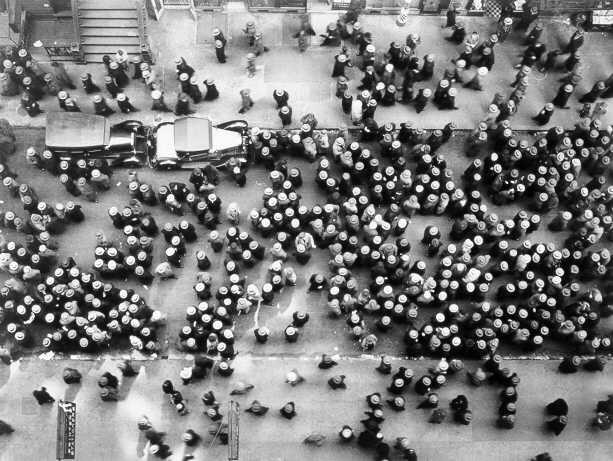
the form and the material. A hairdo limits or includes. In the 1930 photograph
taken by Margaret Bourke-White, not a head was seen without a hat.


This was NY, in the Garment District and was taken for an article in Fortune Magazine entitled "Cloak and Suit". Cloak and suit is a good place to start. A hat protects the wearer from the elements, and suits the framework that the face provides. Or it should. It should flatter and excite. It should speak volumes about the person, and live not just in the moment, but carry an element of timelessness .

This was NY, in the Garment District and was taken for an article in Fortune Magazine entitled "Cloak and Suit". Cloak and suit is a good place to start. A hat protects the wearer from the elements, and suits the framework that the face provides. Or it should. It should flatter and excite. It should speak volumes about the person, and live not just in the moment, but carry an element of timelessness .
In Lussac-les-Chateaux, in Central France, there are 15,000
year old rock drawings depicting people with hats on their heads.

Hats are part of the universal language of costume. Who, what, where becomes more easily translated with something as simple as the right hat.

Hats are part of the universal language of costume. Who, what, where becomes more easily translated with something as simple as the right hat.
Historically, we owe a debt of gratitude to St. Clement
somewhere around 750 AD-818 AD. He gingerly placed a piece of carded wool into
his shoe and lo and behold, felt was made! Hatmakers everywhere could now use
that spontaneous discovery to fashion hats to protect the head. Jump 1000 years
ahead to a burgeoning industry in Europe. We, the people, as a colony of Great
Britain became both very important, and very disruptive all because of a hat.
One could almost say that the American Revolution happened because of a hat.
The beaver population of Europe was almost extinct, but we had the in over
here. Beaver skins were the first great American Trade commodity.
We supplied Britain with pelts for their hat industry. From 1700-1770 21 million hats made from beaver pelts were made in Britain and shipped throughout Europe. And so, to protect this very precious cargo, the Hat Act of 1732 was passed in Parliament. Limiting the number of workers, apprentices and slaves in the colonies employed in our own hat industry, this Act was the first rumble of discontent within the American colonies. We couldn't make our own hats. Imagine how that went down.

We supplied Britain with pelts for their hat industry. From 1700-1770 21 million hats made from beaver pelts were made in Britain and shipped throughout Europe. And so, to protect this very precious cargo, the Hat Act of 1732 was passed in Parliament. Limiting the number of workers, apprentices and slaves in the colonies employed in our own hat industry, this Act was the first rumble of discontent within the American colonies. We couldn't make our own hats. Imagine how that went down.
Hats and wars have always gone hand in hand. The
Revolutionary War may have happened because of a hat. And the Civil War helped
create what is now widely known as the western hat. After the war, as displaced
soldiers found their way across these vast United States, appetites whetted for
adventure and new horizons, they took with them the remnants of their uniforms.
Many a farmer wore basic shaped felts on their heads, the classic floppy style
we all know and love today. Mr. Stetson lent a hand and created his own shape,
loved it so much that he founded a hat empire because of it.


Military styles always cropped up in female fashion. The hat
was the final accessory to mimic shapes seen in uniforms throughout WWI and II.
But after the war, when lifestyles changed, styles in fashion changed as well.

WWI brought us the suffragettes sometimes tricorne shapes. The undressing of the 1920's style with the new flapper mentality eliminated the architecture of the Edwardian era from fashion and substituted Art Deco. WWII brought the ode to the ration book, and with it, tiny perchy hats. Dubbed "Doll's Hats" by Elsa Schiaparelli in the late 1930's, while European fashion houses succumbed to the ravages of the limits imposed upon them by dint of war. The proportion worked with the reduced yardage now permitted in garments.

WWI brought us the suffragettes sometimes tricorne shapes. The undressing of the 1920's style with the new flapper mentality eliminated the architecture of the Edwardian era from fashion and substituted Art Deco. WWII brought the ode to the ration book, and with it, tiny perchy hats. Dubbed "Doll's Hats" by Elsa Schiaparelli in the late 1930's, while European fashion houses succumbed to the ravages of the limits imposed upon them by dint of war. The proportion worked with the reduced yardage now permitted in garments.
After WWII, when America returned home, home was often a
shiny new car. Headroom in the 1950's vehicles was shorter than in vehicles of
the 1930's and 40's. Fedoras became not as de rigeur. Costume had bowed to the
new carefree vision of fashion, with more outdoor living and less indoor life
becoming popular. Hairdos changed. For men, mimicking the pompadours of the
early rockers and rebels was much more important that the color of a new
fedora. And so, we have what we have. Do take history into account, and look
around you. As America grew, New York City blossomed.
We welcomed the felted shapes of the Jewish Community on the Lower East Side.
We celebrated with our ethnic diversity as more and more cultures brought with
them their culture, their joy, and their hats.
Where some of us wear hats for sports, some wear them for
events, or protection, there are those who will always wear them for glamour,
and a certain note of mystery they add to their wardrobe every day. Hats
define, underline and help you to shine in a city that today finds itself often
wearing a uniform of conformity. Since the first Kentucky Derby in 1875, fancy
hats come out of their boxes . Since the Royal Wedding, fascinators have hit
their stride. There is always a new reason to wear a hat to the hatlover.
Hatters and milliners follow this simple recipe, put forth by Cheri Bibi, a
milliner in Paris: Take some straw, felt, velvet, leather Add a healthy helping
of grosgrain Trim with flowers, fruits or anything unusual you may have in hand
Add a zest of know how Throw in a pinch of humor
And you have a hat!
Wednesday, January 17, 2018
The Best Clown of All
Flip the coin and you’re in an ebullient world of color. The piazza in Italy is now post WWII. Roberto makes his effervescent entrance atop a travelling troupe’s truck amid a blast of confetti, in blue. The darkness remains in essence, ghosted from the Cav set, as a psychological pall over the piazza.
George in the meantime has fleshed out the nature of the scene in an inappropriate wig and suit that scream tacky but so work.
Moritz Junge did a raucous, ebullient set of costumes that reflected a post-war scrabble for travelling entertainers.
George, long known to Met audiences from ( among other roles) his brilliant Scarpia in Tosca must be foul. He betrays Nedda in his jealousy and carries the bitter end of this two-act opera to fruition.
Roberto is at his acting and singing apex as Canio. Adding to the electricity on stage is Aleksandra’s portrayal of Nedda.
Roberto as Canio is something we’ve been waiting for since the interruptus two years ago when he was pulled out of the role and saved the Met’s production of Manon Lescaut. His poignant delivery of one of the most famous arias in opera melts the soul and hammers the heart. The list is very long of all the iconic arias that Roberto has gifted us with and treasured by the entire lyric world. Vesti la Giubba strikes home, with a fervor only Roberto can grant.
For those of us not so hip on lyric terminology but immersed in the operatic for the intensity that comes with a mammoth stage, costumes that excite, voices that prolong the experience long after the last note dwindles on the airwaves and music that echoes through the ages, Pagliacci per Roberto et Cie. is a must see. Bravo, Mr. Gelb, Sir David, Roberto, Aleks, and George along with the euphonics of the Met orchestra and the ever-present talent of the chorus. Long may this clown live in our memories.
Authors/composers:
Cavalleria Rusticana, Pietro Mascagni
Pagliacci, Ruggiero Leoncavallo
Conductor, Nicola Luisotti
Tuesday, November 21, 2017
Don't Wear the Turkey

The post-Thanksgiving stupor, plus the vast expanse of a long weekend, may make you feel like shopping. The mall rats will be trolling this weekend, off to the big box stores for bargains, to buy things so important they'll be forgotten or broken by next year. Ah, the joys of the holidays in the States.
Think, instead, of the long-term, the investment piece....that gift that brings joy now, and for years to come. An investment piece doesn't have to be come in a little blue box (forgive me, Tiffany's). An investment piece is something that adds value to your life in some way, whether it be a visual documentation of a friendship, or a new hat for that coat you still love. An investment piece should be a timeless thing, based on the long term good feeling it will bring year after year. Stocks and bonds, real estate, jewelry, all familiar faces on the landscape of investment. Translate the word into real meaning, and bring something new to the table. Gift someone a trip to a good tailor, to have a special something made to order. Give a cancer patient a trip to a local milliner, to get a new hat designed just for them. Do a field trip with your best friend's kids, and record it as a gift for the parents.
Use your imagination, and the stars are the limit. The thanks and the joy resulting will be without definition, and definitely an investment.
Image courtesy of: www.7gadgets.com
Sunday, November 19, 2017
St. Catherine's Day


...or week, as we do things here in the States.
In Paris, on Nov. 26th, all of the single unmarried "hands" working in the fashion houses of Paris don a green and yellow hat in honor of St. Catherine, and to win for themselves, their employers, and their future. What they win is unsure, but this has been a tradition amongst the seamstresses, milliners, tailors and needleworkers of France for decades. The idea is to make a superlative, hysterical, over- the- top- hat, and go for it. There were parades in the past, through the streets of Paris. Now, perhaps, just the fashion show, the hats, and a bow will suffice.
If you're in Paris for the Fete, email me and let me know what's happening.
In New York City, The Milliners Guild, a scant two years old, is holding their annual St. Catherine's Day tomorrow. By meeting at the Millinery District Synagogue, in the Garment District, and parading up Fifth Avenue to the party at Haven, they hope to stimulate hat wearing in general, and camaraderie in the industry, in particular.
The idea of donning a specialty piece and parading through the streets is often met with interest, even in New York. Last year, the New York Times covered the event with splashy photography as the milliners et al proceeded through Bryant Park, up to Rockefeller Center, and around St. Pat's.
This is the opportunity of the year to wear whatever outrageous gear you have, hat-wise, and have fun. Send in the hats!
This year, there will be a contest for the best hat, non-milliners only, thank you. Once at Haven, a complimentary Champagne Hour will be from 6-7, with Veuve Cliquot (thank you, Moet Hennessey USA!) and hors d'oeuvres. The latest collections from the milliner members will be on display, for pert posing and purchasing.
Haven itself is a warm and inviting space, reminiscent of a gentlemen's club from the victorian era, with a mezzanine and a choice seating area for light repast.
Puerto Rico Gets to Work
Most of you know about the island, and the hurricane, and the aftermath. Perhaps you don't realize that this is a static situation, with very slow growth and progress thanks to a few generalities. Not necessary to get into the politics of the situation on the island and in the hallways of the US Senate, but only with an ongoing effort from all of us "off-island" will there be progress and change.
Jump back a few decades, to the 19th Century actually, to discover the origins of the US relationship with Puerto Rico. Follow the thread to the post-WWI era, through the 1950's and up to today. Bear in mind that the Jones Act impedes imports, and the US finds ways and means of latching onto contracts that produce income for anyone and everyone except the people of Puerto Rico.
Millions of us from famous names to high school students feel the hardship and not just because we all have relatives in Puerto Rico who are living through this nightmare. The Puerto Rican people are as they say, resilient, but the island needs all the help we can give it.
Think of Puerto Rican's as your next door neighbors and find a way to help.
My Puerto Rican side lives in daily frustration knowing that the island needs help and it isn't arriving fast enough. And it just isn't enough. Some, not all, politicians in the US are making life even more difficult for this little jewel of an island. Reading online will help educate, as to the status quo, so it's not up to me to do that.
Our job at hand is to help keep Puerto Rico within eye sight. Ellen Christine Couture is designing a capsule collection of hats , headgear and caps to help introduce products that might work for a gift, or just to help keep the topic alive in your circle.
For the first two items in the collection we've hand-painted a stylized Puerto Rican flag onto cotton canvas, and used it as an applique...sold as a patch that you can sew on yourself, or pre-sewn on our kepi. Not a baseball cap, a kepi is a throwback to the French Legionnaires, and the American Civil War military issue headgear. A bit more stylish that the normal baseball cap. The kepi is made in NYC, in cotton, with fabric donated by James Thompson & Co. an American fabric company established in 1860, and very appropriate for this style cap.
Our production was a limited edition, executed by our guy, Felix, in Long Island City. No more can be produced, as limited runs interrupt the flow in the factory.
Watch for our next style, and please help Puerto Rico.
Our funds from the sale of these work hats go to: ConPRmetidos and Centros Sor Isolina Ferre, both non-profit organizations that are easily researched on the internet.
It's just one of the ways we're helping. Build a network within your community or join one of the agencies already reaching out. It feels good, and good is what we're all about, right?
Just an aside about our picture: our lovely intern, Holly sits with two of our neighbors rescued from Puerto Rico.
http://www.ellenchristinecouture.com/store/puerto-rico/
Thursday, November 16, 2017
Millinery Bibliography
These are just a few of the books relating to hats on our shelves. We hope that they help inspire and delight your burning need to learn all
about millinery.
Adele, Campione, Il Cappello Da Uomo, Itinerari D’Immagini, 1988
Albrizio, Ann, Classic Millinery Techniques, Lark Books, 1998
Anlezark, Mildred, Hats on Heads: The Art of Creative Millinery, Kangaroo Press, 1990
Bawden, Juliet, The Hat Book: Creating Hats for Every Occasion, Lark Books, 1993
Ben-Yusuf, MME. Anna, Edwardian Hats: The Art of Milliners, R.L. Shep, 1992
Besson, Jean Louis, Le Livre Des Uniformes: Histoire Des Costumes, Gallimard, 1987
Blum, Dilys E., Ahead of Fashion: Hats of the 20th Century, Philadelphia Museum of Art, 1993
Bolomier, Elaine, Le Chapeau: Grand Art et Savoir-faire, Musee du Chapeau, 1996
Bou, Louis, and Stephen Jones. Couture Hats. New York: Harper Design, 2012
Burke, Emma Maxwell, A Perfect Course in Millinery, The Illustrated Milliner Company, 1925
Burkel, Archie, The Joy of Hats, Nelson Printing, 2012
Clark, Fiona, The Costume Accessories Series: Hats, B.T. Batsford Ltd, 1982
Couldridge, Alan, The Hat Book, Ventura Publishing Ltd, 1980
Dache, Lilly, Lilly Dache’s Glamour Book, So Stated, 1956
Demornex, Jacqueline, Le Siecle en Chapeaux, Du May, 1991
Dreher, Denise, From the Neck Up: An Illustrated Guide to Hatmaking, Madhatter Press, 1981
Du Mortier, Bianca M., Chapeau, Chapeaux!, Rijksmuseum, 1997
Feen, Diane, Hat Life, A Mint Publishing Company, 2009
Genin, J.N., An Illustrated History of the Hat: From the Earliest Ages to the Present, N.P., 1848
Gorsline, Douglas, What People Wore, Bonanza Books, 1987
Hopkins, Susie, The Century of Hats, Chartwell Books Inc, 1999
Jones, Stephen, Hats: An Anthology, V&A Publishing, 2009
Kamitsis, Lydia, Les Chapeaux: Une Histoire de Tete, Dans Le Droit Fil, 1998
Kim, Eugenia, Saturday Night Hat, Potter Craft, 2006
Maroukian, Francine and Sarah Woodruff, The Handbook of Style: Expert Fashion and Beauty Advice, Quirk Books, 2006
Mercie, Marie, Voyages Autour D’un Chapeau, Ramsay/De Cortanze, 1990
Probert, Christina, Hats in Vogue, Abbeville, 1981
Pufpaff, Suzanne, Nineteenth Century Hat Maker’s and Felter’s Manuals, Stony Lonesome Press, 1995
Reilly, Maureen and Mary Beth Detrich, Women’s Hats of the 20th Century, Schiffer Publishing, 1997
Remiasz, Stella V., Hats: Design and Construction, Hat Tree Studio, 1986
Robinson, Fred Miller, The Man in the Bowler Hat, The University of North Carolina Press, 1993
Schilling, Gigi, Ageless Bride, First Printing, 2007
Shields, Jody, Hats: A Stylish History and Collector’s Guide, Clarkson Potter/Publishers, 1991
Shover, Edna Mann, Art in Costume Design, Milton Bradley Company, 1926
Smith, Desire, HATS: with Values, Schiffer Publishing Ltd, 1996
Smith, Rodney and Leslie Smolan, The Hat Book, Doubleday, 1993
Steinberg, Neil, Hatless Jack, The Penguin Group, 2004
Waring, Lyn, Hats Made Easy, Sally Milner Publishing, 1995
Wilcox, R. Turner, The Mode in Costume, Scribner, 1948
Women’s Institute of Domestic Arts & Sciences, Millinery: A Complete Course, Vivs Ribbons & Laces, 1993
Womens Institute of Domestic Arts & Sciences, Ribbon Trimmings: A Course in Six Parts, Vivs Ribbons and Laces, 1992
Labels:
costume,
costume history,
fascinator,
fedora,
haberdashery,
hats,
headgear,
headpieces,
Lily Dache,
millinery,
Schiaparelli,
Stephen Jones
Subscribe to:
Posts (Atom)